Lost money to a crypto or trading scam? Read this first:

If your losses exceed £3,000 (in the UK) or $10,000 worldwide The Crypto Adviser offers FREE advice on recovering your funds.

>> GET IN TOUCH
Have I Been Caught Up In A Crypto Scam?
How can I tell if I’ve been scammed?
The realisation that you’ve been caught up in a scam can be devastating, especially if a lot of money is involved.
But scams, especially those involving cryptocurrency, are not always obvious, especially not at the start.
Crypto scammers can be very cunning and they use elaborate techniques to entice people into parting with their money.

Here, I’ll examine what to look out for and how to spot that you might have got caught up in a crypto scam.
Have I been targeted by scammers?
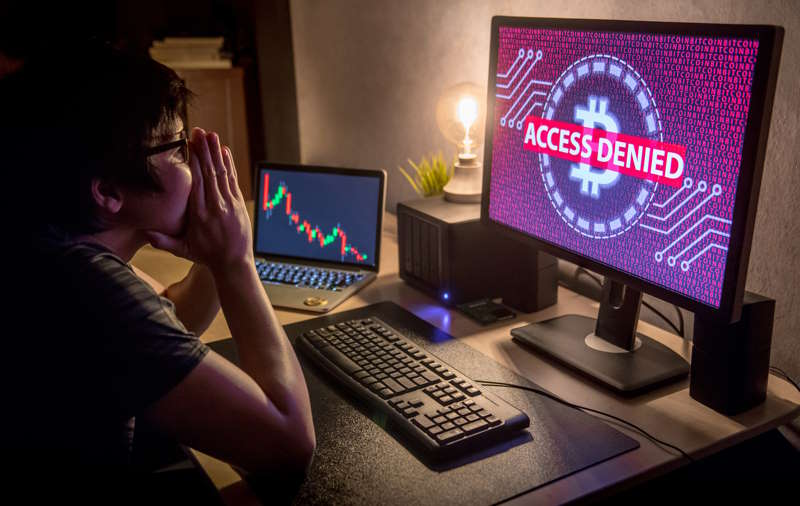
The first sign of trouble usually appears when investors try to withdraw their money from a crypto platform.
They’ll find access to their assets blocked and that they’re unable to withdraw either their initial investment or the ‘profits’ that are showing in their account.
This is often when people reach out to The Crypto Adviser for help because they’ll struggling to understand what’s going on.
A lot of the people I help have already contacted the support agent at the platform and have been told they need to pay a significant fee to secure the release of their money.
Some people go ahead and pay, only to be told another fee is now due, while others realise that not all is as it should be.
Unfortunately, those who pay the extra fees lose this money as well as their initial investment.
What are the ‘fees’ demanded by crypto scammers?
Put simply, the ‘release fees’ that crypto scammers ask for are simply another way of extracting more money from victims.
These fees can be described in many different ways, but all serve the same purpose. The scammers might demand:
- Taxes
- Commissions
- Adviser fees
These are just a few examples, but there are many others.
The scammers may ask for additional lump sums to be paid, or an amount that’s a percentage of the alleged balance of the victim’s account, including the fake profit.
Many of the scam victims I’ve spoken to say they’ve queried why this fee can’t simply be deducted from the balance, but the scammers always have an answer to justify why this can’t be done.
The warning signs of a crypto scam
Often it can be difficult to spot the obvious red flags as scammers can be very convincing.
A lot of the victims I speak to have been contacted out of the blue through a social media platform, such as WhatsApp or Facebook.
The scammer claims the message was sent by mistake but uses it as an opening to strike up a conversation with the would-be victim.
Remember, they are doing this to multiple people simultaneously and they are never who they say they are.
Once they’ve established a relationship – which can be over a period of several weeks or even months – they may casually mention investing.
They might not directly suggest it to you, but rather say that a relative is doing it and earning a lot of money in the hope that this sparks your interest and prompts you to ask a question about it.
Many crypto scams also begin on dating websites where a victim is duped into believing they’re speaking to a potential love interest.
Scammers ask for small investments at the start
The scammers don’t want to scare people off so their tactic is to lull victims into a false sense of security at the start.
This often involves allowing people to make small initial investments and, in some cases, enable small withdrawals to be made as well to build confidence.
The ultimate aim is to convince you to invest much larger sums of cash and keep you coming back.
Victims will be shown large profits accruing in their account and will often be told they can achieve bonus rewards if they reach certain investment tiers by depositing more funds.
However, none of the profits are real and, as I said before, it’s only when the victim comes to withdraw their money that they realise something is amiss.
Scammers use WhatsApp groups to build trust
Another common tactic of crypto scammers is to use a WhatsApp group alongside a fake website/investing platform or DApp.
The group will be populated by what appears to be fellow investors who are chatting about the money they’re making and how much they’ve withdrawn.
But these groups will be populated by other scammers and sometimes bots to perpetuate the myth of the investment and make victims feel secure.
Scammers often ask for cash to be converted into crypto
One common element to many of the scams I’ve encountered is the use of cryptocurrency to make investments in the fake platforms.
In nearly every case, victims are asked to first transfer cash to a genuine crypto exchange and convert it into cryptos such as Bitcoin, Ethereum or USDT (Tether) before transferring it to their ‘investment account’.
This account will usually take the form of a crypto wallet that’s controlled by the scammers.
Often the scammers will ask victims to download AnyDesk, a popular app that allows remote access to other computers which is used by many legitimate companies around the world.
But in the case of crypto scammers, AnyDesk enables them to see everything the victim is typing in or shown on their screen, including passwords and crypto seed phrases – the ultimate key to crypto ownership.
Once the scammers have these details they’re free to access any of the victim’s crypto accounts or wallets that may have been set up.
Scammers transfer fake cryptocurrencies to victim’s wallets
When a victim becomes suspicious and raises their concerns the scammers know that the time they have to extract more money is running out.
Which is why they often transfer a fake cryptocurrency into the victim’s wallet to ‘reassure’ them that their funds are safe.
It’s remarkably easy to create a cryptocurrency if you have the knowledge to do it, and it can prolong a crypto scam significantly.
You can usually tell that a crypto has been faked because the logo shown in a crypto wallet won’t match that of the official coin and the contract address will be different.
A contract address is something that every cryptocurrency has and is a unique identifier attached to each coin.
These addresses can be checked on websites such as CoinMarketCap.
By showing victims a balance of coins that appear to be a genuine crypto, the scammer can make them feel confident in transferring more funds over.
Other crypto scam red flags that you should look out for
There are often a number of tell-tale signs that you’re involved in a crypto scam which should set alarm bells ringing in addition to the ones I’ve mentioned above.
They include:
Unrealistic profits. In the vast majority of cases that I see the victim has been promised returns on their investment that are simply unattainable in the real world. It’s important to consider the returns on offer and whether they’re likely when compared to mainstream financial products.
No video calls. You might decide you’d like to have video chat with a new ‘friend’ or love interest you’ve met online, but scammers are keen to avoid this. Which is why they’ll often come up with a wide range of excuses as to why this isn’t possible.
No company information. The internet allows you to check the credentials of any legitimate company instantly. For obvious reasons crypto scammers hide their details, often listing a fake address on the scam platform they’re using. This is easily checkable and should be part of the due diligence process before parting with any cash.
There are many other red flags to look out for which I’ve written about in my ultimate guide to spotting a crypto scam post.
Final word
Spotting a scam early can save you a lot of money, which is why it’s important to be alert to the possibility that it’s happening to you.
Avoiding scams altogether is even better, and this can often be done by carrying out your own due diligence and understanding that if an investment return sounds too good to be true, it usually is.
Crypto is still very new and many people are unfamiliar with how it works and how to spot a legitimate platform over a fake one which what the scammers prey on.
Which is why another key rule to investing comes into play here – never invest in something that you don’t understand.
Related post: Crypto scam help and resources
Other Posts



Disclaimer: Nothing on this website constitutes financial advice. The information provided is for educational purposes only.